updates /
What is bipolar paranoia?
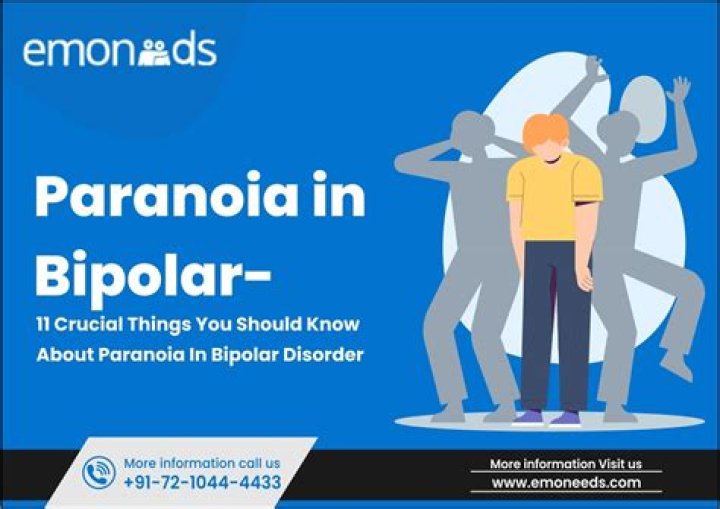
Paranoia — a belief that people are following you or talking about you — is a symptom of psychosis in bipolar disorder that can be managed medically and with other strategies.
What does bipolar paranoia feel like?
Some people will become hypervigilant, highly defensive to imagined criticism, and preoccupied with perceived hidden motives and threats to their well-being. Those who have milder symptoms of paranoia can function and work, while others may experience hallucinations, a sense of unreality, delusions, and even psychosis.What are the symptoms of paranoia?
Some identifiable beliefs and behaviors of individuals with symptoms of paranoia include mistrust, hypervigilence, difficulty with forgiveness, defensive attitude in response to imagined criticism, preoccupation with hidden motives, fear of being deceived or taken advantage of, inability to relax, or are argumentative.What is a bipolar psychotic break?
Bipolar psychosis happens when a person experiences an episode of severe mania or depression, along with psychotic symptoms and hallucinations. The symptoms tend to match a person's mood.Does Bipolar make you delusional?
Delusions can be a symptom of both manic and depressive episodes in people with bipolar disorder. These false beliefs can be very distressing to anyone who experiences them. If you're concerned about delusions in yourself or a loved one, seek help from your primary care provider, a psychologist, or a psychiatrist.What Paranoia and Delusions in Bipolar Disorder Feel Like
Can bipolar turn into schizophrenia?
However, these conditions are distinct from one another, and they do not always co-occur. While bipolar disorder cannot develop into schizophrenia, it's possible to experience symptoms of both. Before you consult a mental health professional, here are a few things you should know about the two conditions.How is bipolar paranoia treated?
In these situations, options for management include:
- Therapy. Going to therapy and learning how to work with paranoid thoughts may help lessen the paranoia. ...
- Social support. “Reviewing these fears with a loved one or trusted friend, in addition to health care providers, can also be useful,” says Peterson. ...
- Support groups.
What is the life expectancy of a person with bipolar disorder?
The authors found that the pooled life expectancy for patients with bipolar disorder, after removal of 1 outlier study, was 67.4 years (95% CI 65.2-69.7), with no evidence of publication bias. Life expectancy was significantly shorter in men (64.6) compared to women (70.5).Do you hear voices with bipolar?
Yes, some people who have bipolar disorders may have hallucinations and see or hear things that are not present. This can occur during an episode of mania or depression.What triggers bipolar disorder?
Factors that may increase the risk of developing bipolar disorder or act as a trigger for the first episode include: Having a first-degree relative, such as a parent or sibling, with bipolar disorder. Periods of high stress, such as the death of a loved one or other traumatic event. Drug or alcohol abuse.What triggers paranoia?
Lack of sleep can trigger feelings of insecurity and even unsettling feelings and hallucinations. Fears and worries may develop late at night. The effects of recreational drugs and alcohol. Some types of recreational drug may trigger paranoia, such as cocaine, cannabis, alcohol, ecstasy, LSD and amphetamines.What is an example of paranoia?
Examples of Paranoid ThoughtsFeeling like everyone is staring at and/or talking about you. Interpreting certain facial gestures in others as some sort of inside joke that's all about you, whether the other person is a stranger or friend. Thinking people are deliberately trying to exclude you or make you feel bad.
What does a paranoid person do?
People with paranoid personality disorder (PPD) are always on guard, believing that others are constantly trying to demean, harm or threaten them. These generally unfounded beliefs, as well as their habits of blame and distrust, interfere with their ability to form close or even workable relationships.How can you tell if someone is bipolar?
Symptoms - Bipolar disorder
- feeling sad, hopeless or irritable most of the time.
- lacking energy.
- difficulty concentrating and remembering things.
- loss of interest in everyday activities.
- feelings of emptiness or worthlessness.
- feelings of guilt and despair.
- feeling pessimistic about everything.
- self-doubt.
How can you tell if someone is bipolar or schizophrenia?
People with bipolar disorder generally alternate between periods of low and high moods, while people with schizophrenia typically lose touch with reality as they experience hallucinations and delusions.What can mimic bipolar disorder?
Some non-psychiatric illnesses, such as thyroid disease, lupus, HIV, syphilis, and other infections, may have signs and symptoms that mimic those of bipolar disorder. This can pose further challenges in making a diagnosis and determining the treatment.Do bipolar people's eyes change color?
You'll find more than a few anecdotes suggesting bipolar disorder can change the appearance of the eyes, generally by affecting pupil dilation, gaze, and even eye color. So-called bipolar eyes might include: dilated pupils. “sparkling” eyes, or eyes that appear more liquid than usual.What are bipolar hallucinations like?
Often, hallucinations are fleeting: You might briefly see flashing lights, feel someone touch your hand, or hear music playing. They can also be longer and more detailed: You could hear voices having a conversation, or see a long-departed loved one walking past your house.What does psychosis look like in bipolar?
People experiencing psychosis will typically appear incoherent and completely unaware of how extreme their behavior has become. In terms of symptoms, they are typically classified as being either mood-congruent or mood-incongruent. The hallucinations and/or delusions match the person's mood.What are the 4 stages of bipolar?
4 Types of Bipolar Disorder
- Symptoms include:
- Bipolar I. Bipolar I disorder is the most common of the four types. ...
- Bipolar II. Bipolar II disorder is characterized by the shifting between the less severe hypomanic episodes and depressive episodes.
- Cyclothymic disorder. ...
- Unspecified bipolar disorder.
Does bipolar worsen with age?
Changes in the frequency and severity of episodes are among the most evident changes in bipolar disorder at an older age. Research suggests that older adults with bipolar disorder often experience: more frequent episodes. more depressive episodes and less time spent in manic or hypomanic states.Is bipolar brain damage?
A study by researchers at the San Francisco VA Medical Center indicates that people with bipolar disorder may suffer progressive brain damage.How do you talk to someone with bipolar paranoia?
Encourage him to follow his treatment program. Speak clearly - Simple sentences and unambiguous words reduce the chance of being misinterpreted.Be accepting, yet firm - Delusions are very real to the person having them. Don't confront the person about their beliefs or attempt to help him reality-test.How do you calm down paranoia?
- Try to get enough sleep. Sleep can give you the energy to cope with difficult feelings and experiences. ...
- Think about your diet. Eating regularly and keeping your blood sugar stable can make a difference to your mood and energy levels. ...
- Try to keep active. ...
- Spend time in nature. ...
- Try doing something creative.